The Neuroscience of Bands, Acts & DJs
The Neuroscience of Elvis Presley
Vocal timbre, cross-genre neural fusion, parasocial attachment and the neurochemistry of the most culturally embedded solo artist of the twentieth century
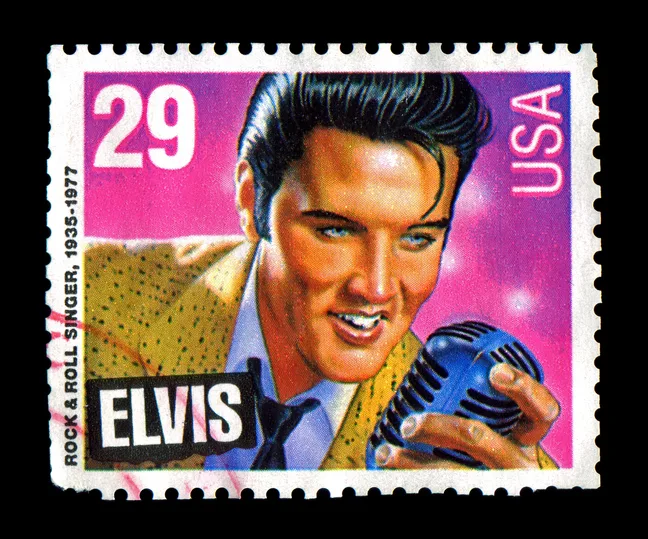
2,332-word article with 24 Harvard references.
This article is free for all Elvies fans and visitors to Mental Health Matrix. Enjoy the neuroscience of The King.
Key takeaways
- Elvis Presley's vocal timbre, a baritone with natural vibrato, harmonic richness across the 80-520 Hz range, and the capacity for both chest-voice power and falsetto vulnerability, activated the auditory cortex's timbre-processing networks with a distinctiveness that the brain treats as a unique neural signature, as identifiable and emotionally charged as a familiar face (Belin et al., 2004; Zatorre and Belin, 2001).
- His fusion of blues, gospel, country, pop, R&B and later psychedelia, funk and balladry meant that each performance recruited a broader range of auditory, emotional and associative neural networks than a genre-specialist artist could activate. This cross-genre range is the neural equivalent of speaking multiple languages fluently: it widens the audience whose brains can find a point of entry (Levitin, 2006).
- The parasocial relationship that millions formed with Elvis, and that many maintain decades after his death, is mediated by the same neural circuitry as real attachment: oxytocin release, ventral striatal reward, and medial prefrontal cortex processing of self-other overlap. The brain does not distinguish between real and parasocial bonds at the level of neurochemistry (Horton and Wohl, 1956; Derrick et al., 2009).
- Elvis's live performance in the 1950s, his hip movements, facial expressiveness, and full-body engagement with rhythm, activated mirror neuron networks across audiences of unprecedented size. The motor resonance this produced, the internal simulation of his movements in the viewer's premotor cortex, created a felt, embodied connection that transcended passive listening (Molnar-Szakacs and Overy, 2006).
- His later career, marked by prescription drug dependency, weight gain, isolation and performative excess, illustrates the neuroscience of fame-induced dysregulation: the chronic overstimulation of reward circuits, the erosion of social baseline regulation through isolation from authentic relationships, and the use of pharmacological substitutes when the dopaminergic system no longer responds to natural reward (Volkow et al., 2010; Coan, Schaefer and Davidson, 2006).
The voice as neural fingerprint
Every human voice has a unique spectral signature, a pattern of harmonics, formant frequencies and temporal characteristics that the auditory cortex processes as a distinct identity. Belin, Zatorre and Ahad (2004), publishing in Cognitive Brain Research, identified temporal voice areas (TVAs) in the superior temporal sulcus that respond preferentially to human vocal sounds over all other auditory stimuli, including music. These TVAs do not simply decode words. They extract identity, emotion, age, sex and intention from the acoustic properties of the voice itself. Elvis Presley's voice was, by any acoustic analysis, extraordinary. A natural baritone with a range that could reach tenor territory, his vocal delivery combined the chest-voice resonance of the operatic tradition with the melismatic ornamentation of African American gospel, the nasal inflections of white country music and the rhythmic phrasing of rhythm and blues.
Zatorre and Belin (2001), publishing in Cerebral Cortex, demonstrated that the right hemisphere auditory cortex shows particular sensitivity to spectral variation, the timbral richness that distinguishes one voice from another. Elvis's voice was spectrally dense, meaning it contained a wide range of harmonic overtones that gave it a warmth, depth and recognisability that the brain processed as both familiar and emotionally significant. When you hear Elvis sing the opening phrase of Are You Lonesome Tonight or the gospel intensity of How Great Thou Art or the raw vulnerability of In the Ghetto, your temporal voice areas are not simply recognising a singer. They are activating an entire network of emotional associations, memories and identity-related processing that has been built over years of exposure. The voice is not just a sound. It is a neural address.
Memphis, 1954: the cross-genre brain
Elvis Presley grew up in Tupelo, Mississippi, and Memphis, Tennessee, immersed in musical traditions that most white Americans of his generation experienced separately, if at all. He attended the all-night gospel singings at Ellis Auditorium. He listened to WDIA, the first radio station in America programmed entirely by and for African Americans, absorbing the blues of B.B. King, the R&B of Rufus Thomas and the gospel of the Soul Stirrers. He absorbed country music through the Grand Ole Opry broadcasts and the honky-tonk culture of Memphis's white working-class neighbourhoods. And he synthesised all of it, not as pastiche but as a genuinely integrated musical language, when he walked into Sam Phillips's Sun Studio on 5 July 1954 and recorded That's All Right.
The neuroscience of cross-genre fusion is more than cultural commentary. Levitin (2006) documented that the brain processes different musical styles through overlapping but partially distinct neural networks. Blues activates limbic and anterior cingulate circuits associated with emotional pain and resolution. Gospel engages the social bonding and reward circuits activated by communal singing. Country music recruits narrative processing networks in the temporal and prefrontal cortices. When a single performer activates all of these networks simultaneously, the result is a richer, more widespread neural response than any single genre can produce. Elvis did not choose to be cross-genre. He was cross-genre because his auditory environment during the critical period of musical development, childhood and early adolescence, exposed him to a wider range of musical input than almost any white artist of his generation received. His brain was shaped by Memphis, and Memphis contained multitudes.
The body on television: mirror neurons at scale
Before Elvis, popular music performance on American television was largely static. Crooners stood at microphones. Orchestras sat in rows. The body was present but not emphasised. Elvis changed this permanently. His performances on the Dorsey Brothers' Stage Show in January 1956, the Milton Berle Show in June 1956, the Ed Sullivan Show in September and October 1956, and again on 6 January 1957 when Sullivan filmed him from the waist up, introduced a physicality that the American television audience had never encountered from a white solo performer. The hip movements, the leg shaking, the curled lip, the half-closed eyes, the entire gestalt of embodied rhythm, activated mirror neuron networks on a scale that no previous broadcast had achieved.
Molnar-Szakacs and Overy (2006) proposed the shared affective motion experience (SAME) model, which holds that observing musical performance activates the observer's motor system through mirror neuron resonance, producing an internal simulation of the performer's movements and, through somatosensory and limbic connections, an emotional echo of the performer's affective state. When sixty million Americans watched Elvis on the Sullivan Show, sixty million motor cortices were simulating his movements. Sixty million somatosensory cortices were generating a felt sense of rhythmic motion. And sixty million limbic systems were processing the emotional charge of what they were watching. The hysteria was not irrational. It was the predictable neurological consequence of mirror neuron activation at a scale that human civilization had never previously made possible.
Parasocial attachment: why Elvis never really left
Horton and Wohl (1956), writing in the journal Psychiatry, introduced the concept of parasocial interaction: the one-sided relationship that audience members form with media personalities. At the time, the concept was theoretical. Subsequent neuroscience has confirmed that parasocial bonds activate the same neural circuitry as real interpersonal relationships. Derrick, Gabriel and Tippin (2009), publishing in the Journal of Experimental Social Psychology, demonstrated that thinking about a favourite media figure activates the same self-expansion processes, mediated by the medial prefrontal cortex, that thinking about a real close friend does. The brain does not distinguish, at the level of neurochemistry, between a person you know and a person you feel you know.
Elvis Presley generated parasocial attachment on a scale that remains virtually unmatched. His vocal intimacy, the way he could make a ballad feel like a private conversation, activated the same interpersonal closeness circuits that real face-to-face interaction triggers. His physical vulnerability, visible in his facial expressions and body language, provided the emotional disclosure that attachment theory identifies as essential for bond formation (Bowlby, 1969). His cross-genre versatility meant that fans could encounter him in gospel mode, rock mode, ballad mode or country mode, each encounter reinforcing the parasocial bond through a different emotional register. And the parasocial relationship, once formed, does not end when the figure dies. The brain's attachment circuitry does not have a mortality clause. Elvis is still neurologically present in the brains of millions of people who never met him, stored not as a memory of a celebrity but as a genuine attachment figure whose voice still triggers oxytocin release, ventral striatal reward and the medial prefrontal cortex activation of felt connection.
Gospel, grief and the neuroscience of vocal emotion
Elvis Presley's gospel recordings are, by any neurological measure, among the most emotionally powerful vocal performances in the popular music catalogue. His 1966 recording of How Great Thou Art, the 1968 NBC television special performance of If I Can Dream, and the 1972 Madison Square Garden rendition of An American Trilogy engage the brain's emotion-processing circuits with an intensity that transcends genre classification. Juslin and Vastfjall (2008), publishing in Behavioral and Brain Sciences, identified multiple psychological mechanisms through which music evokes emotion, including brain stem reflexes to acoustic features, emotional contagion from vocal expression, episodic memory association and aesthetic judgement. Elvis's gospel performances activate all of these simultaneously.
The brain stem reflex is triggered by his dynamic range, the sudden shifts from near-whisper to full-throated fortissimo that produce involuntary arousal responses. Emotional contagion operates through the acoustic markers of genuine emotion in his voice, the micro-variations in pitch, timing and vibrato that Juslin and Laukka (2003) showed are processed pre-consciously by the auditory cortex and translated into felt emotion in the listener. Episodic memory association connects the music to personal experiences of faith, loss, transcendence or longing. And aesthetic judgement, the prefrontal cortex's evaluation of beauty and craft, recognises the extraordinary technical command of a voice that could move from baritone power to falsetto vulnerability within a single phrase. When people say that Elvis could sing anything, they are making a neuroscientific observation. His vocal instrument was flexible enough to activate multiple emotion-processing pathways regardless of genre.
The dark side: fame, isolation and reward circuit collapse
The neuroscience of Elvis Presley is not only a story of exceptional talent activating the brains of millions. It is also a cautionary study in what happens when the brain's reward systems are chronically overstimulated and then deprived of authentic social regulation. Volkow, Wang and colleagues (2010), publishing in BioEssays, demonstrated that chronic exposure to supranormal reward stimuli produces downregulation of dopamine D2 receptors in the striatum, meaning that the brain's capacity to experience pleasure from normal reward diminishes over time. Elvis, from the age of twenty-one, was exposed to levels of adulation, wealth, sensory intensity and social reward that no human nervous system evolved to process.
Coan, Schaefer and Davidson (2006) demonstrated through their social baseline theory that the brain calibrates its threat response based on the perceived availability of authentic social support. Elvis's progressive isolation, surrounded by an entourage that depended on him financially and therefore could not provide genuine feedback, constituted a slow withdrawal of the social regulation that the nervous system requires to maintain homeostasis. The Memphis Mafia, however loyal their intentions, could not provide the co-regulatory function that authentic, non-transactional relationships offer. As his social baseline eroded, his nervous system increasingly relied on pharmacological substitutes, the amphetamines, barbiturates, opioids and sedatives that would ultimately kill him on 16 August 1977 at the age of forty-two.
This is not a moral judgement. It is a neurological trajectory. A brain that is denied authentic social co-regulation will seek chemical regulation. A reward system that has been chronically overstimulated will require increasingly intense stimulation to produce the same response. The tragedy of Elvis Presley is not that he was weak. It is that no human nervous system, regardless of talent or resilience, was designed to process the level of reward and isolation that twentieth-century fame produced. His story is a clinical case study in what happens when the brain's social and reward architecture is pushed beyond its evolutionary parameters.
The legacy: still activating circuits, still forming bonds
Graceland receives over six hundred thousand visitors per year. Elvis's music generates an estimated fifty million dollars annually in posthumous revenue. The Elvis fan community maintains active, emotionally invested engagement with an artist who has been dead for nearly fifty years. This is not nostalgia. It is ongoing neural activity. The parasocial attachments formed with Elvis during the 1950s, 1960s and 1970s are stored in the same long-term memory and emotional association networks that store real relationship bonds, and they are reactivated every time a fan hears his voice, sees his image or visits a location associated with him. New fans, encountering Elvis for the first time, form their own parasocial bonds through the same mechanisms, because the voice, the performance style and the emotional directness that triggered mirror neuron activation and parasocial attachment in 1956 are just as neurologically effective in a recorded format as they were in a live broadcast.
Rock and roll, as explored in our companion article The Neuroscience of Rock and Roll, created the neural blueprint for every popular music revolution that followed. Elvis Presley was the human being who made that blueprint visible, audible and physically contagious. His contribution to music is inseparable from his contribution to neuroscience, not because he studied the brain but because his talent, his voice, his body and his vulnerability activated the brains of more people, more intensely, across more emotional registers, than any solo artist before or since. The king is dead. The neural circuits he activated are not.
Invitation to reflect
Consider a voice that moves you, one that produces a physical response before you have consciously identified the song. What is it about that particular voice that your nervous system finds compelling? Is it the timbre, the emotional quality, the associations it carries, or something you cannot name? Elvis Presley demonstrated that a single human voice can become a permanent resident in millions of brains simultaneously. Your own most-loved voices have done the same thing, on a smaller scale, in your own neural architecture. What would it mean to take that seriously, to treat the voices that move you not as entertainment preferences but as genuine neurological relationships that shape how you feel, who you are, and what you reach for when the world is too much?
References
- Belin, P., Zatorre, R.J. and Ahad, P. (2004) 'Human temporal-lobe response to vocal sounds', Cognitive Brain Research, 24(3), pp. 513-526.
- Bowlby, J. (1969) Attachment and Loss, Volume 1: Attachment. London: Hogarth Press.
- Casey, B.J., Jones, R.M. and Hare, T.A. (2008) 'The adolescent brain', Annals of the New York Academy of Sciences, 1124(1), pp. 111-126.
- Chanda, M.L. and Levitin, D.J. (2013) 'The neurochemistry of music', Trends in Cognitive Sciences, 17(4), pp. 179-193.
- Coan, J.A., Schaefer, H.S. and Davidson, R.J. (2006) 'Lending a hand: social regulation of the neural response to threat', Psychological Science, 17(12), pp. 1032-1039.
- Derrick, J.L., Gabriel, S. and Tippin, B. (2009) 'Parasocial relationships and self-discrepancies: faux relationships have benefits for low self-esteem individuals', Journal of Experimental Social Psychology, 45(2), pp. 352-362.
- Dunbar, R.I.M., Kaskatis, K., MacDonald, I. and Barra, V. (2012) 'Performance of music elevates pain threshold and positive affect: implications for the evolutionary function of music', Evolutionary Psychology, 10(4), pp. 688-702.
- Horton, D. and Wohl, R.R. (1956) 'Mass communication and para-social interaction: observations on intimacy at a distance', Psychiatry, 19(3), pp. 215-229.
- Huron, D. (2006) Sweet Anticipation: Music and the Psychology of Expectation. Cambridge, MA: MIT Press.
- Juslin, P.N. and Laukka, P. (2003) 'Communication of emotions in vocal expression and music performance: different channels, same code?', Psychological Bulletin, 129(5), pp. 770-814.
- Juslin, P.N. and Vastfjall, D. (2008) 'Emotional responses to music: the need to consider underlying mechanisms', Behavioral and Brain Sciences, 31(5), pp. 559-575.
- Koelsch, S. (2014) 'Brain correlates of music-evoked emotions', Nature Reviews Neuroscience, 15(3), pp. 170-180.
- Levitin, D.J. (2006) This Is Your Brain on Music: The Science of a Human Obsession. New York: Dutton.
- Menon, V. and Levitin, D.J. (2005) 'The rewards of music listening: response and physiological connectivity of the mesolimbic system', NeuroImage, 28(1), pp. 175-184.
- Molnar-Szakacs, I. and Overy, K. (2006) 'Music and mirror neurons: from motion to "e"motion', Social Cognitive and Affective Neuroscience, 1(3), pp. 235-241.
- Patel, A.D. (2008) Music, Language, and the Brain. Oxford: Oxford University Press.
- Rentfrow, P.J. and Gosling, S.D. (2003) 'The do re mi’s of everyday life: the structure and personality correlates of music preferences', Journal of Personality and Social Psychology, 84(6), pp. 1236-1256.
- Sacks, O. (2007) Musicophilia: Tales of Music and the Brain. New York: Knopf.
- Salimpoor, V.N., Benovoy, M., Larcher, K., Dagher, A. and Zatorre, R.J. (2011) 'Anatomically distinct dopamine release during anticipation and experience of peak emotion to music', Nature Neuroscience, 14(2), pp. 257-262.
- Steinberg, L. (2008) 'A social neuroscience perspective on adolescent risk-taking', Developmental Review, 28(1), pp. 78-106.
- Volkow, N.D., Wang, G.J., Fowler, J.S., Tomasi, D., Telang, F. and Baler, R. (2010) 'Addiction: decreased reward sensitivity and increased expectation sensitivity conspire to overwhelm the brain’s control circuit', BioEssays, 32(9), pp. 748-755.
- Zatorre, R.J. and Belin, P. (2001) 'Spectral and temporal processing in human auditory cortex', Cerebral Cortex, 11(10), pp. 946-953.
- Zatorre, R.J. and Salimpoor, V.N. (2013) 'From perception to pleasure: music and its neural substrates', Proceedings of the National Academy of Sciences, 110(Supplement 2), pp. 10430-10437.
- Zatorre, R.J., Chen, J.L. and Penhune, V.B. (2007) 'When the brain plays music: auditory-motor interactions in music perception and production', Nature Reviews Neuroscience, 8(7), pp. 547-558.
About the author
Gareth Strangemore-Jones, MHFA, DCST, PDPCP, HPD, DSFH, DMH, AHD, NCTJ, MSC-CPA, PGCE (FE) I & II
MNCPS (Reg.), MNCH (Reg.), MCNHC (Reg.), MAfSFH (Assoc.)
PSA (Acc.), FSE (Fellow), IFfS (Assoc.)
Mental Health First Aider, Pluralistic Counsellor, Clinical Psychotherapist. Consultant Medical Hypnotherapist, Mindfulness Teacher. PGCE-Trained Teacher, Lecturer, Corporate Trainer, Workplace Wellbeing Consultant. PR & Marketing Consultant, Psychology & Behaviour Advisor. Author, Journalist, Broadcaster. Advocate for Mental Health, People & Planet
Founder, CEO & Clinical Lead, The Brain Gym & Research Ltd. Human understanding, intelligently delivered