The Neuroscience of Being Human
The Neuroscience of Gambling
Near-miss effects, variable reinforcement schedules, prediction error exploitation, and how gambling hijacks the brain's learning system without any chemical substance
1,312-word article with 8 Harvard references.
Key takeaways
- Gambling produces dopamine release in the nucleus accumbens comparable to that produced by psychoactive substances, despite the absence of any pharmacological agent. The dopamine response is driven by uncertainty, anticipation, and prediction error rather than by the monetary outcome itself (Clark et al., 2009).
- Near-miss outcomes, in which the result falls just short of a win, activate the reward system almost as strongly as actual wins, despite being objectively losses. This near-miss effect sustains gambling behaviour by creating the subjective impression of skill improvement and imminent success (Clark et al., 2009).
- Variable ratio reinforcement schedules, in which wins are unpredictable and intermittent, produce the highest rates of persistent behaviour and the greatest resistance to extinction in both animal and human learning. Slot machines are designed to exploit this principle (Skinner, 1953).
- Problem gamblers show reduced grey matter volume and metabolic activity in the ventromedial prefrontal cortex, the region responsible for evaluating risk, processing loss, and making decisions under uncertainty, producing a neurological profile that impairs the capacity to learn from negative outcomes.
- Modern gambling products, particularly electronic gaming machines and online betting platforms, have been engineered using behavioural psychology principles to maximise engagement, minimise the subjective experience of loss, and exploit the prediction error system with a precision that earlier forms of gambling could not achieve.
The addiction with no drug
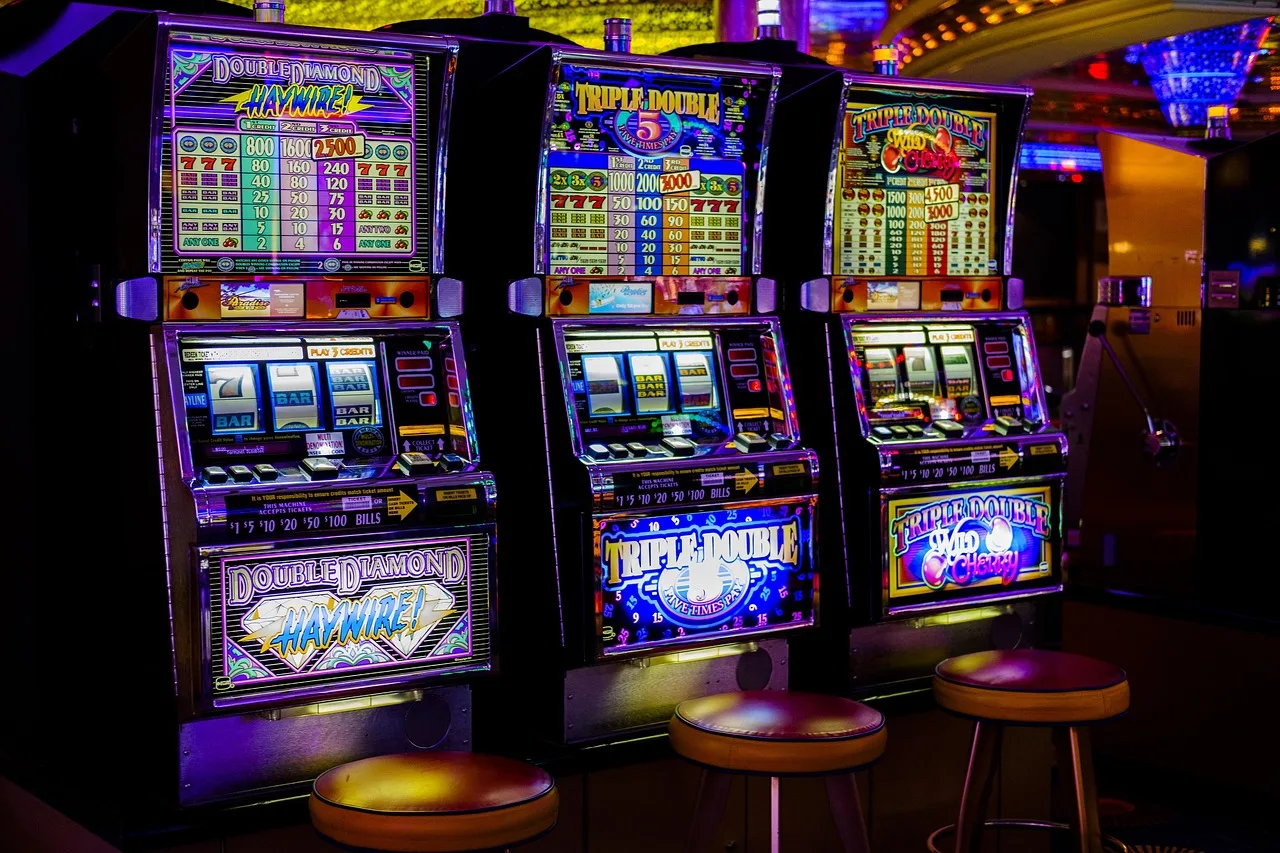
The person sitting in front of a slot machine at two o'clock in the morning has not ingested a substance. No molecule has crossed their blood-brain barrier. No chemical has bound to a receptor on a dopamine neuron. And yet the scan of their brain would show the same pattern of activation that you would find in a person using cocaine: elevated dopamine in the nucleus accumbens, reduced activity in the prefrontal cortex, hyperactivation of the amygdala in response to gambling-related cues, and impaired connectivity between the regulatory circuits that should be evaluating the wisdom of the behaviour and the reward circuits that are compelling its continuation.
Luke Clark at the University of Cambridge demonstrated that the gambling brain is not merely analogous to the substance-addicted brain. It is the same system, operating on the same principles, driven by the same neurochemistry (Clark et al., 2009). The drug, in gambling, is not a chemical. It is a pattern of stimulation, a carefully calibrated sequence of anticipation, uncertainty, near-miss, and intermittent reward that activates the dopamine system as reliably as any pharmacological agent. The gambling industry did not discover this by accident. It discovered it through decades of product refinement guided, implicitly and increasingly explicitly, by an understanding of how the reward system works and how to exploit it.
Near-misses and the lie the brain tells itself
A near-miss is an outcome that falls just short of a win. Two cherries and a lemon on a slot machine. A horse that finishes second by a nose. A football result that misses the accumulator by one goal. Objectively, a near-miss is a loss. You put money in and you did not get more money out. But the brain does not process it as a loss. Clark's neuroimaging studies showed that near-miss outcomes activate the ventral striatum and the insula almost as strongly as actual wins, producing a dopamine response and a subjective experience that is closer to winning than to losing.
The reason is that the brain's reward system processes proximity to reward rather than outcome. A near-miss signals that the correct outcome was close, that the system nearly produced a win, and that persistence is likely to be rewarded. In a skill-based activity, this would be rational. A near-miss in archery really does indicate that your aim is improving and that further practice is likely to produce a hit. But slot machine outcomes are determined by random number generators. The near-miss does not indicate proximity to a win. It indicates nothing at all. The brain, interpreting a random event through circuits that evolved for skill acquisition, draws a conclusion that is entirely false: that it is getting closer to winning. And this false conclusion is the engine that keeps the person playing.
Variable reinforcement: the schedule of maximum persistence
B.F. Skinner demonstrated in the 1950s that the schedule on which rewards are delivered determines the persistence of the behaviour that produces them (Skinner, 1953). Fixed schedules, in which the reward arrives after a predictable number of responses or a predictable interval, produce moderate, steady behaviour that extinguishes quickly when the reward is removed. Variable schedules, in which the reward arrives unpredictably, produce intense, persistent behaviour that is extraordinarily resistant to extinction. The pigeon on a variable ratio schedule will peck the lever thousands of times after the last reward was delivered, because each peck might be the one that produces it.
Slot machines are variable ratio reinforcement schedules made physical. The win arrives unpredictably, after an unpredictable number of plays, and the near-misses that fill the gaps between wins sustain the prediction error signal that drives continued play. The player is, neurologically, the pigeon in the Skinner box, pressing the lever because the variable schedule has produced the maximum possible persistence. This is not an insult to the player. It is a statement about the power of the reinforcement schedule. Skinner's pigeons were not stupid. They were responding normally to a schedule that was designed to produce exactly the behaviour they exhibited. The player is responding normally too. The schedule was designed, with considerably more sophistication and considerably more financial incentive, to produce exactly the behaviour they are exhibiting.
The prefrontal cost and the failure to learn from loss
Problem gamblers show structural and functional changes in the ventromedial prefrontal cortex and the anterior cingulate cortex, regions involved in evaluating risk, processing loss, and updating behaviour in response to negative outcomes. Guillaume Sescousse and colleagues demonstrated that pathological gamblers show blunted neural responses to losses, meaning that the brain's system for learning from negative outcomes is impaired (Sescousse et al., 2013). The gambler does not process losses normally. The signal that would, in a healthy brain, produce the negative prediction error that teaches the organism to avoid repeating a losing strategy is weakened, distorted, or absent.
The result is a brain that responds strongly to wins and near-wins but learns poorly from losses, a combination that produces exactly the behaviour pattern observed in problem gambling: persistent play despite mounting losses, the subjective belief that a system or strategy is working despite objective evidence to the contrary, and the escalation of stakes in an attempt to recapture the dopamine response that tolerance has diminished. The industry understands this. Modern electronic gaming machines are designed to minimise the subjective experience of loss through features such as losses disguised as wins, in which the player receives a payout that is less than their stake but is accompanied by the sounds and visual effects of a win. The brain registers the celebration. It does not register the arithmetic.
Invitation to reflect
The gambling industry is not selling entertainment. It is selling a pattern of neural stimulation that has been optimised, through decades of product testing and behavioural data analysis, to maximise the persistence of play and the resistance of that play to the rational evaluation of its costs. The slot machine is a Skinner box. The betting app is a variable ratio schedule with social proof and twenty-four-hour availability. The casino is an environment engineered to suppress time awareness, reduce the salience of loss, and amplify the salience of gain. None of this requires the player to be foolish, irresponsible, or morally deficient. It requires them to have a human brain, which is the one thing every player brings to the table. The neuroscience does not excuse the behaviour. It explains it. And in explaining it, it shifts the question from why can you not stop to who designed this so that stopping would be this hard.
References
- Clark, L, Lawrence, AJ, Astley-Jones, F and Gray, N (2009) Gambling near-misses enhance motivation to gamble and recruit win-related brain circuitry. Neuron, 61(3), pp. 481–490.
- Sescousse, G, Barbalat, G, Domenech, P and Dreher, JC (2013) Imbalance in the sensitivity to different types of rewards in pathological gambling. Brain, 136(8), pp. 2527–2538.
- Skinner, BF (1953) Science and human behavior. New York: Macmillan.
- Potenza, MN (2014) The neural bases of cognitive processes in gambling disorder. Trends in Cognitive Sciences, 18(8), pp. 429–438.
- Leyton, M and Bhatt, AP (2017) Dopamine ups and downs in vulnerability to addictions: a neurodevelopmental model. Trends in Pharmacological Sciences, 38(10), pp. 895–911.
- Linnet, J, Mouridsen, K, Peterson, E, Moller, A, Doudet, DJ and Gjedde, A (2011) Striatal dopamine release codes uncertainty in pathological gambling. Psychiatry Research, 204(1), pp. 55–60.
- Hodgins, DC, Stea, JN and Grant, JE (2011) Gambling disorders. Lancet, 378(9806), pp. 1874–1884.
- Schull, ND (2012) Addiction by design: machine gambling in Las Vegas. Princeton: Princeton University Press.
About the author
Gareth Strangemore-Jones, MHFA, DCST, PDPCP, HPD, DSFH, DMH, AHD, NCTJ, MSC-CPA, PGCE (FE) I & II
MNCPS (Reg.), MNCH (Reg.), MCNHC (Reg.), MAfSFH (Assoc.)
PSA (Acc.), FSE (Fellow), IFfS (Assoc.)
Mental Health First Aider, Pluralistic Counsellor, Clinical Psychotherapist. Consultant Medical Hypnotherapist, Mindfulness Teacher. PGCE-Trained Teacher, Lecturer, Corporate Trainer, Workplace Wellbeing Consultant. PR & Marketing Consultant, Psychology & Behaviour Advisor. Author, Journalist, Broadcaster. Advocate for Mental Health, People & Planet
Founder, CEO & Clinical Lead, The Brain Gym & Research Ltd. Human understanding, intelligently delivered